
(Coomassie stained 2D gels, from Wiki)
I use Two-dimensional gel electrophoresis to analyze proteins of the bacteria from the last entry.

http://www.lbl.gov/Publications/Currents/Archive/view-assets/Apr-30-2004/nice...
Đây là hình dạng vi khuẩn mà mình dùng trong nghiên cứu của mình, tên của nó là desulfovibrio desulfuricans.

(Đông năm trước, hướng có cái nhà như bao diêm ấy là trường, ảnh của bạn cùng khoa)
Phóng viên Vnexpress quy đổi sai đơn vị đo hàm lượng : "Cơ quan Thuốc và Thực phẩm Mỹ (FDA) hôm qua tuyên bố việc ăn phải một lượng rất nhỏ melamine - nồng độ 2,5 microgam/kg (2,5 ppm) - sẽ không gây hại cho sức khỏe, ngay cả khi người ta ăn thực phẩm đó hàng ngày"
http://vnexpress.net/GL/Doi-song/2008/10/3BA071CE/
2,5 ppm = 2,5 miligam/kg chứ không phải 2,5 microgam/kg (=2,5 ppb)
Thế này nhé:
1 gam/kg bằng một phần nghìn (về khối lượng)
1 miligam/kg là một phần triệu (ppm)
1 microgam/kg là một phần tỉ (ppb)
(Trả lời em Evil ở làng ven, copy về 360 cho bạn nào muốn tìm hiểu)
Evil: Chị Yến ơi, có cách gì mà tự mình kiểm tra được Melanin trong sữa hay đồ ăn không?
------
Theo State Council of China thì hàm lượng melamine tìm thấy trong sữa ở Trung quốc vừa rồi là từ 0,09ppm đến 619ppm, và sữa ở Shijiangzhuang Sanlu Co. có hàm lượng cao nhất, lên tới 2563 ppm (đơn vị ppm có chỗ dùng là mg/kg, tương đương). Vì nó cao dã man thế mà bọn trẻ con lại hầu như chỉ uống sữa nên lượng vào cơ thể qua ngày tháng thành nhiều và tích tụ lại ở thận.
Bạn nào muốn tìm hiểu về các phương pháp phân tích melamine thì down load file này:
http://www.yousendit.com/download/bVlDcXl1ZDVubHp2Wmc9PQ
Em lặng nghe khuya khoắt buồn rầu
Nét trăng vơi nghiên mực đêm thâu
Viết ra những dòng trầm lắng nhất
Như nước âm thầm miết sâu vào lòng đất
Như anh yên lặng bên em khi ta ở trong nhau.
Nỗi buồn không làm tròn giọt nước mắt
Không cần lời dù một lời nói thật
Rất xa rất sâu từ rất lâu rồi
Từ khi mình biết nhau
đêm đã trôi không như trước
Anh lan toả trong em như nước dẫn mạch cây
Buồn theo nước cũng lên đầy
Anh không muốn em sống như cây
Nhưng em mãi chẳng hơn gì một cái cây thụ động
Em nở bông hoa này gửi hương vào đêm
Và lặng nghe từ đêm
Nỗi buồn của những giọt sương đang sa xuống mang theo cả mùi hương
cùng tình yêu thương bất tận
***
25-9-2008
HY
Lặng mà nghe tan vỡ ở trên đầu
Lặng mà nghe tan vỡ ở trong sâu ...
Ai đi giữa dòng đời tấp nập
Hãy dừng nghe một thoáng không lâu
Nghe dòng sông quặn đau đến chết
Nghe núi đồi khô khát lụi tàn xanh
Nghe con cá than lời từ biệt
Nghe con chim bặt tiếng hót trên cành
Người giấu người những việc làm tồi tệ
Giấu làm sao với đất mẹ dưới chân
Một hạt phù sa còn có nơi trong lòng mẹ
Khỏa lấp vào đâu bao uế tạp bất nhân ?
Giọt nước mắt này nhỏ nhoi bất lực
Xin khóc cùng con cá con chim
Khóc cho cả đời sau bạc phận
Chẳng thấy màu xanh chỉ chết chóc im lìm.
----
HY
18-9-2008

Thứ bảy vừa rồi mình đi ăn BBQ đón năm học mới ở hồ Elbow cùng với các bạn sinh viên nước ngoài, bạn đứng bên phải mình là bạn Thu Hương người Trung quốc mà mình đã kể ở một entry, bạn bên trái người Canada gốc Tanzania học về Psychology, roomate của Thu Hương. Hôm đó mình có làm ở nhà mang đến đấy món nem rán sở trường và được các bạn khen ngon ạ.
Đợt vừa rồi gia đình mình có tranh thủ đi chơi Montreal, Ottawa, Gatineau, bây giờ thì cả hai mẹ con chuẩn bị vào năm học mới còn đồng chí bố thì chăm chỉ đi làm. Tình hình là ảnh đi chơi nhiều nhưng mà photobucket chậm quá lên cũng ngại up ạ.
Lâu rồi không blog mình update vài hàng vậy thôi, nói vắn tắt về mình là mới cắt tóc, béo ra và bận đến nỗi không có thời gian mà lên blog than thở thơ thẩn nữa ạ. :)
Quê nhà có tổ có tiên
Tha hương có mỗi đồng tiền giắt lưng...
20-7-2008
HY
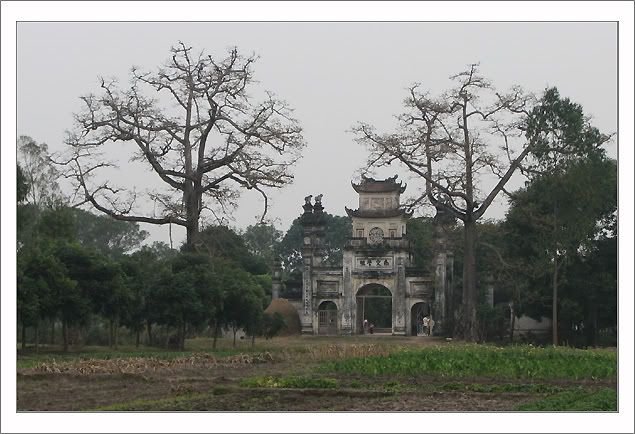
Em về thơ ấu cùng anh
Chân trần trên cỏ yên lành sớm mai
Bước qua thiếu nữ tóc dài
Mùi hương năm cũ chưa phai dịu dàng
Cho dù mấy thế kỷ sang
Trời cao vẫn ánh trăng vàng thân thương
Lênh đênh ngày thẳm đêm trường
Là em yếu đuối bình thường yêu anh
***
18-7-2008
HY
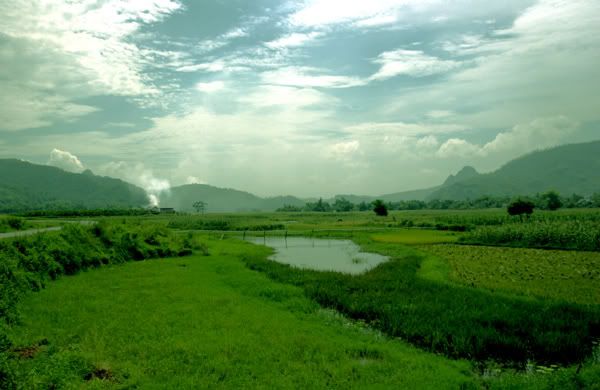
(Ảnh từ blog Le)
Lòng như mặt nước đêm xưa
Trăng in động tiếng chuông chùa khẽ rung...
Đường xa tri kỷ muôn trùng,
Riêng tư giữ chút tương phùng ấy thôi.
15-7-2008
HY
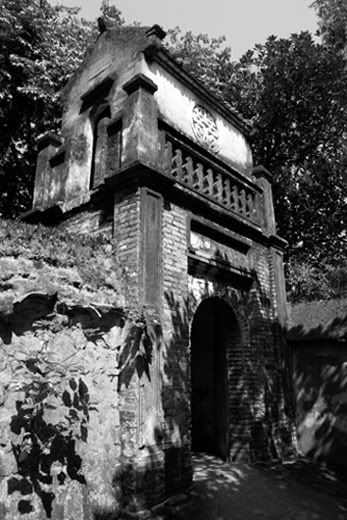
(Ảnh langven.com)
Cơn giông kéo lại đất trời
Mưa rơi rơi mãi mát lời em ru
Mơ đi anh giấc mùa thu
Trời xanh xanh thắm, mây mù em nâng
Cúc vàng lối ngõ bâng khuâng
Mẹ ngồi sảy cốm hương dâng khắp nhà...
***
10-7-2008
HY
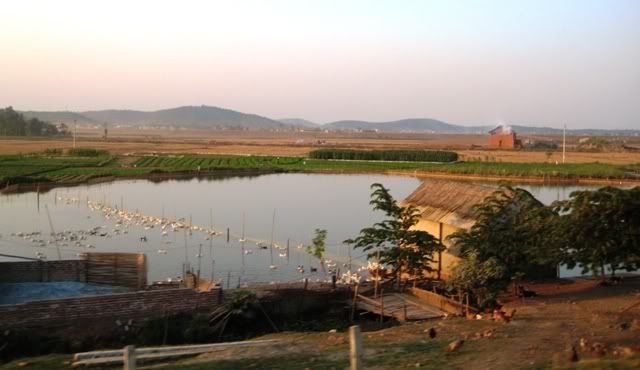
Ảnh của Codet (langven.com)
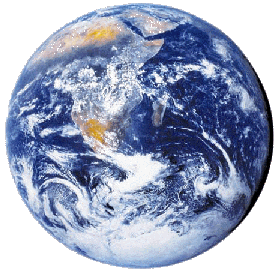
Most of us sense that the Earth is more than a sphere of rock with a thin layer of air, ocean and life covering the surface. We feel that we belong here as if this planet were indeed our home. Long ago the Greeks, thinking this way, gave to the Earth the name Gaia or, for short, Ge. In those days, science and theology were one and science, although less precise, had soul. As time passed this warm relationship faded and was replaced by the frigidity of the schoolmen. The life sciences, no longer concerned with life, fell to classifying dead things and even to vivisection. Ge was stolen from theology to become no more the root from which the disciplines of geography and geology were named. Now at last there are signs of a change. Science becomes holistic again and rediscovers soul, and theology, moved by ecumenical forces, begins to realise that Gaia is not to be subdivided for academic convenience and that Ge is much more than just a prefix.The new understanding has come from going forth and looking back to see the Earth from space. The vision of that splendid white flecked blue sphere stirred us all, no matter that by now it is almost a visual cliche. It even opens the mind's eye, just as a voyage away from home enlarges the perspective of our love for those who remain there.
The first impact of those voyages was the sense of wonder given to the astronauts and to us as we shared their experience vicariously through television, but at the same time the Earth was viewed from outside by the more objective gaze of scientific instruments. These devices were quite impervious to human emotion yet they also sent back the information that let us see the Earth as a strange and beautiful anomaly. They showed our planet is made of the same elements and in much the same proportions as are Mars and Venus, but they also revealed our sibling planets to be bare and barren and as different from the Earth as a robin from a rock.
We now see that the air, the ocean and the soil are much more than a mere environment for life; they are a part of life itself. Thus the air is to life just as is the fur to a cat or the nest for a bird. Not living but something made by living things to protect against an otherwise hostile world. For life on Earth the air is our protection against the cold depths and fierce radiations of space.
There is nothing unusual in the idea of life on Earth interacting with the air, sea and rocks, but it took a view from outside to glimpse the possibility that this combination might consist of a single giant living system and one with the capacity to keep the Earth always at a state most favorable for the life upon it.
An entity comprising a whole planet and with a powerful capacity to regulate the climate needs a name to match. It was the novelist William Golding who proposed the name Gaia. Gladly we accepted his suggestion and Gaia is also the name of the hypothesis of science which postulates that the climate and the composition of the Earth always are close to an optimum for whatever life inhabits it.
The evidence gathered in support of Gaia is now considerable but as is often the way of science, this is less important than is its use as a kind of looking glass for seeing the world diferently, and which makes us ask new questions about the nature of Earth.
If we are "all creatures great and small," from bacteria to whales, part of Gaia then we are all of us potentially important to her well being. We knew in our hearts that the destruction of a whole ranges of other species was wrong but now we know why. No longer can we merely regret the passing of one of the great whales, or the blue butterfly, nor even the smallpox virus. When we eliminate one of these from Earth, we may have destroyed a part of ourselves, for we also are a part of Gaia.
There are many posibilities for comfort as there are for dismay in contemplating the consequences of our membership in this great commonwealth of living things. It may be that one role we play is as the senses and nervous system for Gaia. Through our eyes she has for the first time seen her very fair face and in our minds become aware of herself. We do indeed belong here. The earth is more than just a home, it's a living system and we are part of it.
